WELCOME TO SHANDONG ANSHECL MACHINERY CO.,LTD OFFICIAL WEBSITE!



Understanding the Production Line of Fire Damper Frames: Types and Specifications
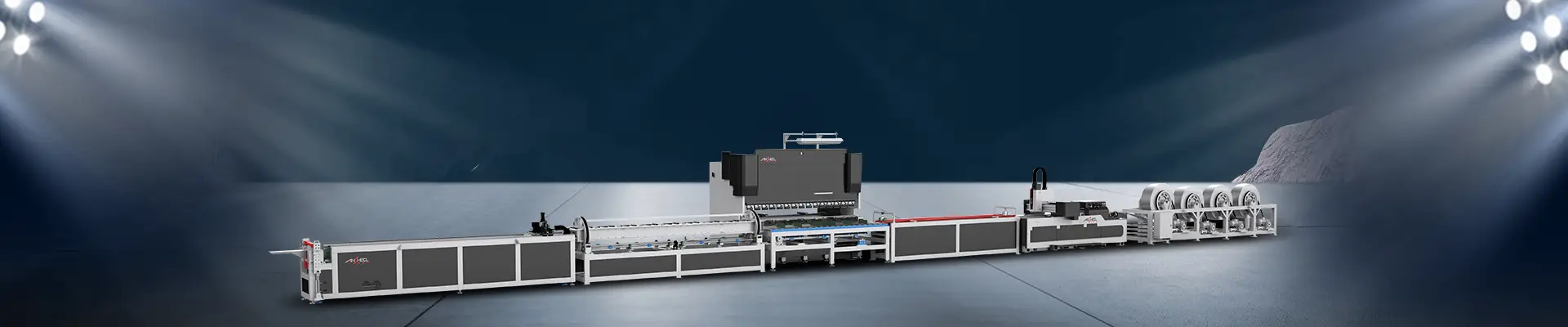
Fire damper frames are critical components in fire safety systems, designed to prevent the spread of smoke and flames through ductwork in buildings. The production line dedicated to manufacturing these frames involves a series of meticulous processes aimed at ensuring durability and compliance with safety standards. Understanding the types of fire damper frame production lines is essential for manufacturers and suppliers in the industry.
There are primarily two types of fire damper frame production lines: automated and semi-automated. Automated production lines utilize advanced machinery and robotics to enhance efficiency and precision. This type of line is ideal for high-volume production, enabling manufacturers to produce large quantities of fire damper frames with consistent quality. On the other hand, semi-automated production lines combine human labor with automated processes. This approach allows for greater flexibility and is suitable for producing various sizes and specifications of fire damper frames.
In terms of specifications, fire damper frames must comply with strict industry standards, including UL (Underwriters Laboratories) and EN (European Norm) certifications. These standards dictate the materials used, the dimensions of the frames, and their fire resistance ratings. Common specifications include dimensions ranging from standard sizes such as 24x24 inches to custom sizes based on project requirements. Additionally, the frames must be constructed from corrosion-resistant materials, typically galvanized steel or stainless steel, to enhance their longevity and performance.
The production process begins with the selection of raw materials, where high-quality steel is sourced to ensure durability. The metal sheets are then cut to the required dimensions, followed by shaping and welding processes to assemble the frame structure. After assembly, the frames undergo rigorous testing to ensure they meet fire resistance and durability standards. Quality assurance is a critical step in the production line, where each frame is inspected for any defects and tested for functionality.
Moreover, manufacturers often incorporate advanced technologies, such as computer-aided design (CAD) and computer numerical control (CNC) machining, to enhance precision and efficiency in the production of fire damper frames. These technologies allow for precise cuts and shapes, thereby reducing material waste and ensuring that the frames fit seamlessly into HVAC systems.
In conclusion, the production line of fire damper frames is a vital aspect of fire safety manufacturing. Understanding the different types and specifications of these production lines is essential for ensuring compliance with safety standards while meeting market demands. Manufacturers must focus on quality, efficiency, and innovation to produce effective fire damper frames that contribute to safe building environments.
There are primarily two types of fire damper frame production lines: automated and semi-automated. Automated production lines utilize advanced machinery and robotics to enhance efficiency and precision. This type of line is ideal for high-volume production, enabling manufacturers to produce large quantities of fire damper frames with consistent quality. On the other hand, semi-automated production lines combine human labor with automated processes. This approach allows for greater flexibility and is suitable for producing various sizes and specifications of fire damper frames.
In terms of specifications, fire damper frames must comply with strict industry standards, including UL (Underwriters Laboratories) and EN (European Norm) certifications. These standards dictate the materials used, the dimensions of the frames, and their fire resistance ratings. Common specifications include dimensions ranging from standard sizes such as 24x24 inches to custom sizes based on project requirements. Additionally, the frames must be constructed from corrosion-resistant materials, typically galvanized steel or stainless steel, to enhance their longevity and performance.
The production process begins with the selection of raw materials, where high-quality steel is sourced to ensure durability. The metal sheets are then cut to the required dimensions, followed by shaping and welding processes to assemble the frame structure. After assembly, the frames undergo rigorous testing to ensure they meet fire resistance and durability standards. Quality assurance is a critical step in the production line, where each frame is inspected for any defects and tested for functionality.
Moreover, manufacturers often incorporate advanced technologies, such as computer-aided design (CAD) and computer numerical control (CNC) machining, to enhance precision and efficiency in the production of fire damper frames. These technologies allow for precise cuts and shapes, thereby reducing material waste and ensuring that the frames fit seamlessly into HVAC systems.
In conclusion, the production line of fire damper frames is a vital aspect of fire safety manufacturing. Understanding the different types and specifications of these production lines is essential for ensuring compliance with safety standards while meeting market demands. Manufacturers must focus on quality, efficiency, and innovation to produce effective fire damper frames that contribute to safe building environments.
